
 Image 1 of 3
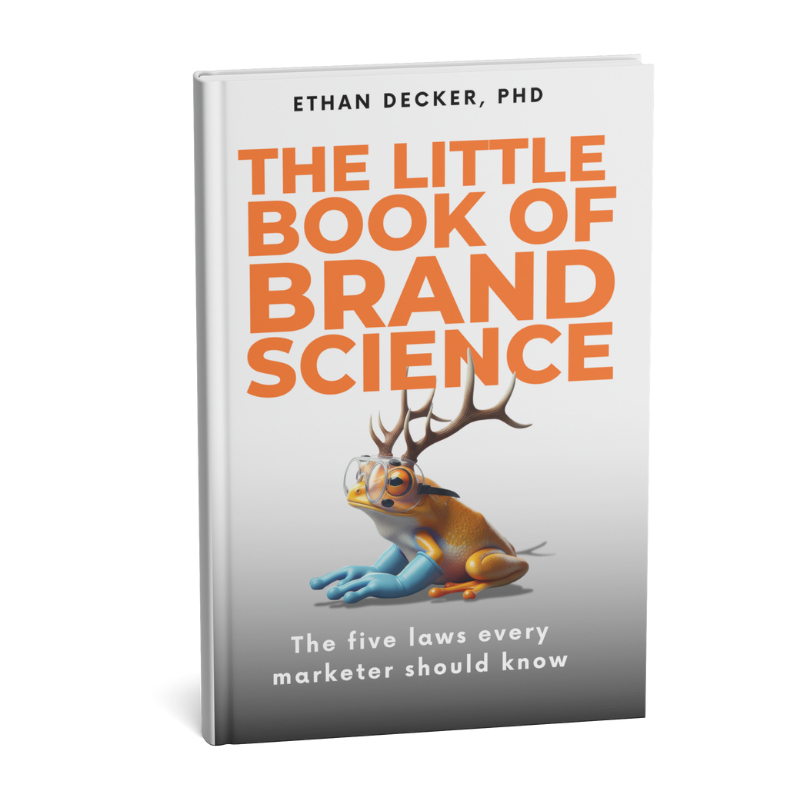 Image 2 of 3
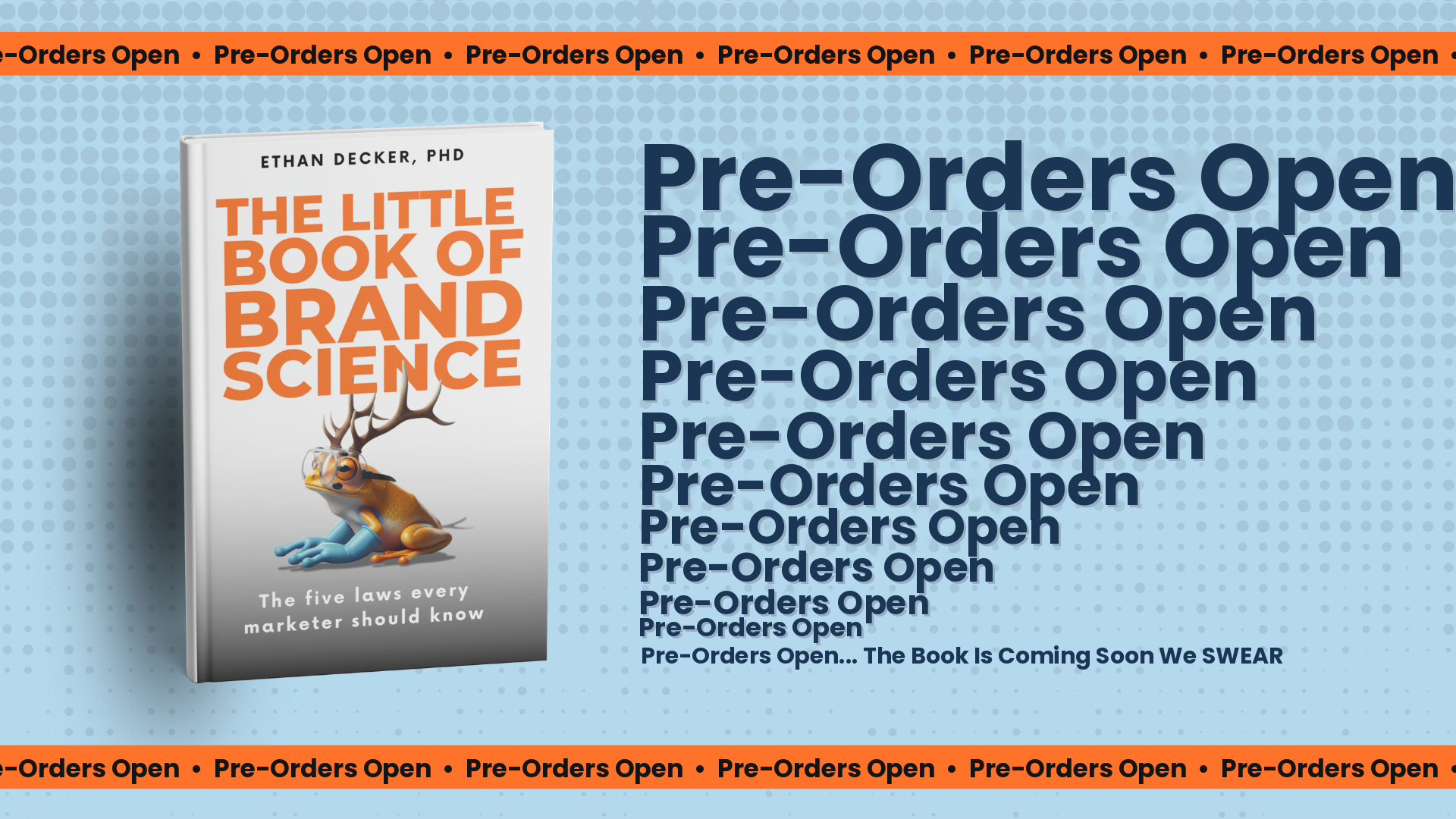 Image 3 of 3
Why is it that in 2026, smart people STILL don't agree on the fundamentals of how people buy, how brands grow, and how ads work? Everyone's got a framework, a hack, a "just do this one weird thing", and half of it contradicts the other half.
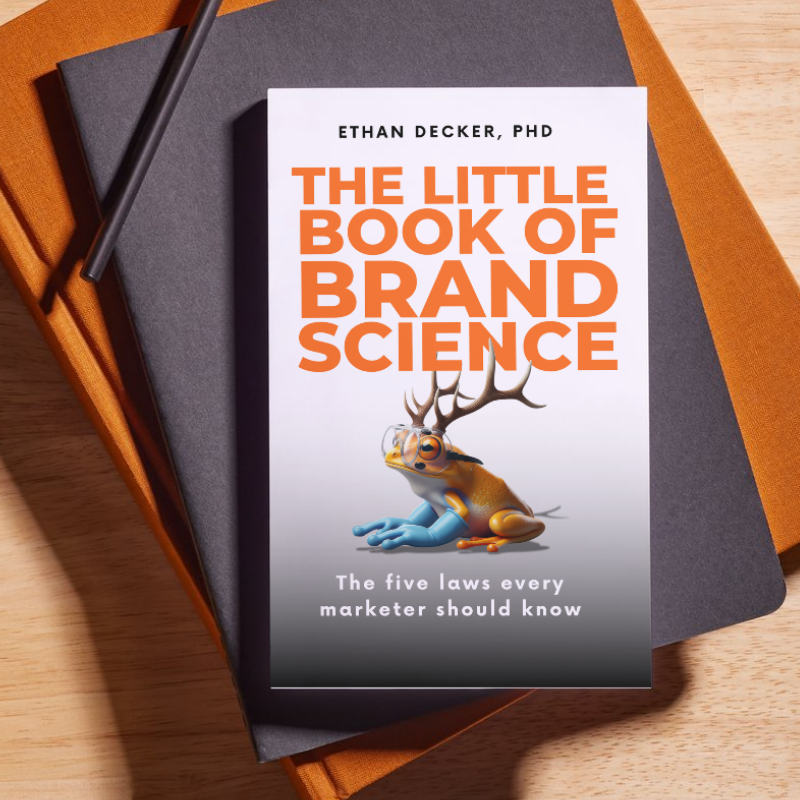
The Little Book of Brand Science helps solve this. It's a fast, funny, and practical guide to the actual laws—the well-documented, decades-old, boringly-consistent patterns—that govern how buyers buy and how brands grow. Repertoires. Mental Misers. The Banana Curve. Cross Purchase. Real science, not vibes. It cuts through the malarkey that we swim in so mindlessly.
This isn't a book of hacks or hot takes. It's the bedrock, the stuff that's true whether or not it's trendy. So you can finally tell the difference between a law (always true) and a lever (works sometimes, for some brands, some of the time). Once you see it, you can't unsee it. Your gut gets smarter. Your decisions get easier to defend. Marketing becomes less subjective and more scientific.
And you become more confident in your choices, even when you don't have the specific data to back up the specific choices. Because now you're operating based on principles and not relying on "the data" to justify every step you take.
Why is it that in 2026, smart people STILL don't agree on the fundamentals of how people buy, how brands grow, and how ads work? Everyone's got a framework, a hack, a "just do this one weird thing", and half of it contradicts the other half.
The Little Book of Brand Science helps solve this. It's a fast, funny, and practical guide to the actual laws—the well-documented, decades-old, boringly-consistent patterns—that govern how buyers buy and how brands grow. Repertoires. Mental Misers. The Banana Curve. Cross Purchase. Real science, not vibes. It cuts through the malarkey that we swim in so mindlessly.
This isn't a book of hacks or hot takes. It's the bedrock, the stuff that's true whether or not it's trendy. So you can finally tell the difference between a law (always true) and a lever (works sometimes, for some brands, some of the time). Once you see it, you can't unsee it. Your gut gets smarter. Your decisions get easier to defend. Marketing becomes less subjective and more scientific.
And you become more confident in your choices, even when you don't have the specific data to back up the specific choices. Because now you're operating based on principles and not relying on "the data" to justify every step you take.