

Your source for knowledge, reports, thought leadership, and other tomfoolery. No fluff. No folklore. Just sticky, science-backed brand truth.
The Most ABSurd Blog
Cover Brand: The Gorgonzola Problem
Gee Ranasinha of KEXINO joins Ethan to unpack why most "marketing" is just comms in disguise.
What’s hiding in the gap between HOW people buy and WHAT they buy?
Domino's discovered that only 15% of its customers use both carryout and delivery, proof that how people shop for your product can matter as much as the product itself.
Cover Brand: Not Everything Is A Nail
Ethan Decker sits down with Wes Towers of Uplift360 to unpack how AI search results are quietly rewriting the rules of lead generation.
What is the Survival Math on Your Small Business?
Over a million small businesses opened in the US last year. Most won't see their 5th birthday, but the ones that survive get safer every year after that.
Cover Brand: Corners & Edges
Ethan Decker sits down with Brad Klein of BP Texas to talk about why he runs five cleaning brands instead of one, and how "the great and powerful Oz" became his actual sales strategy.
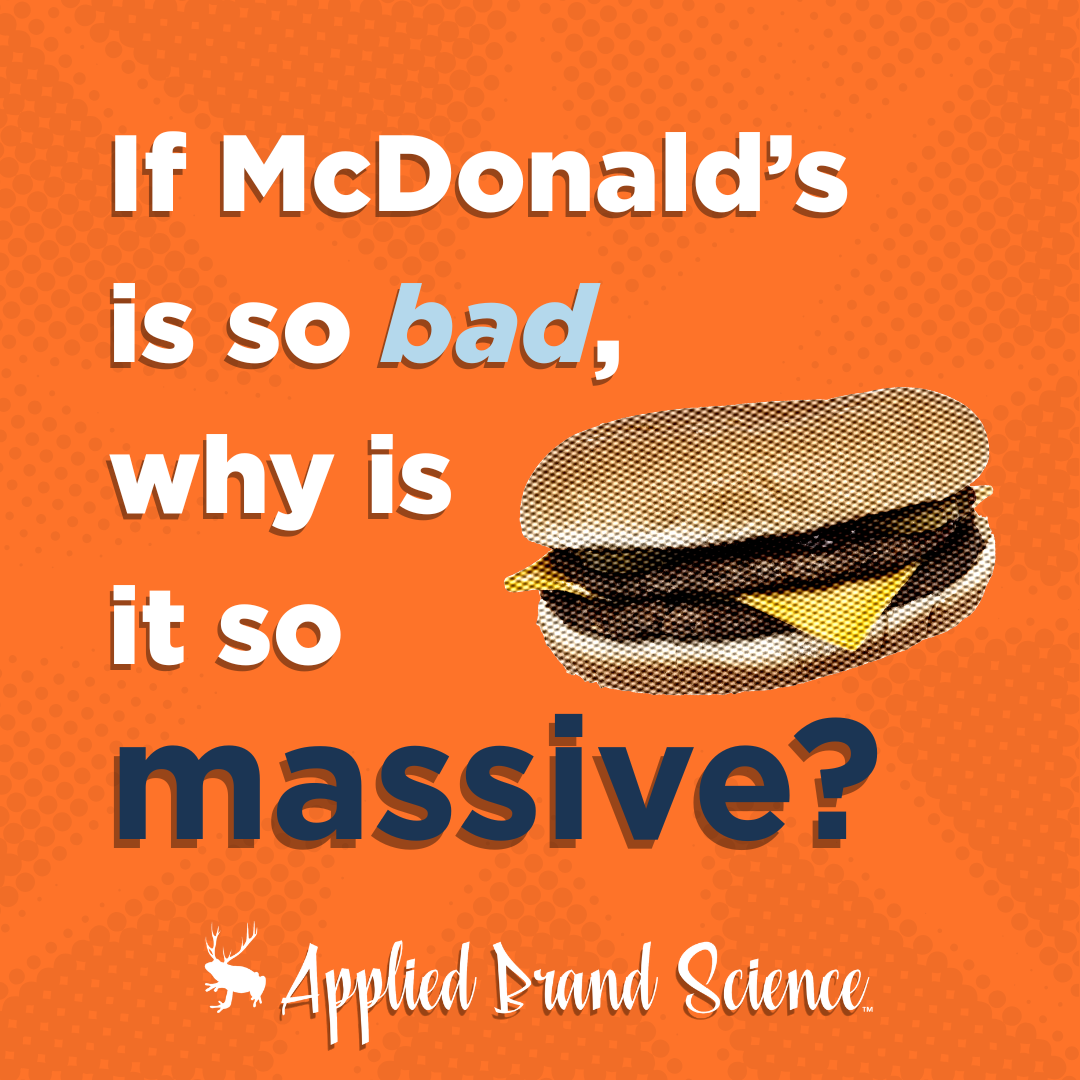
Can You Win a Category While Losing Every Metric?
McDonald's rated dead last against In-N-Out, Five Guys, and Culver's on nearly every quality metric, yet it's four times bigger than its nearest competitor.
Cover Brand: Bankruptcy to Brand
Ethan Decker sits down with Max Emma of Bookskeeping to talk about the winding road most brands take before they become the version we know.
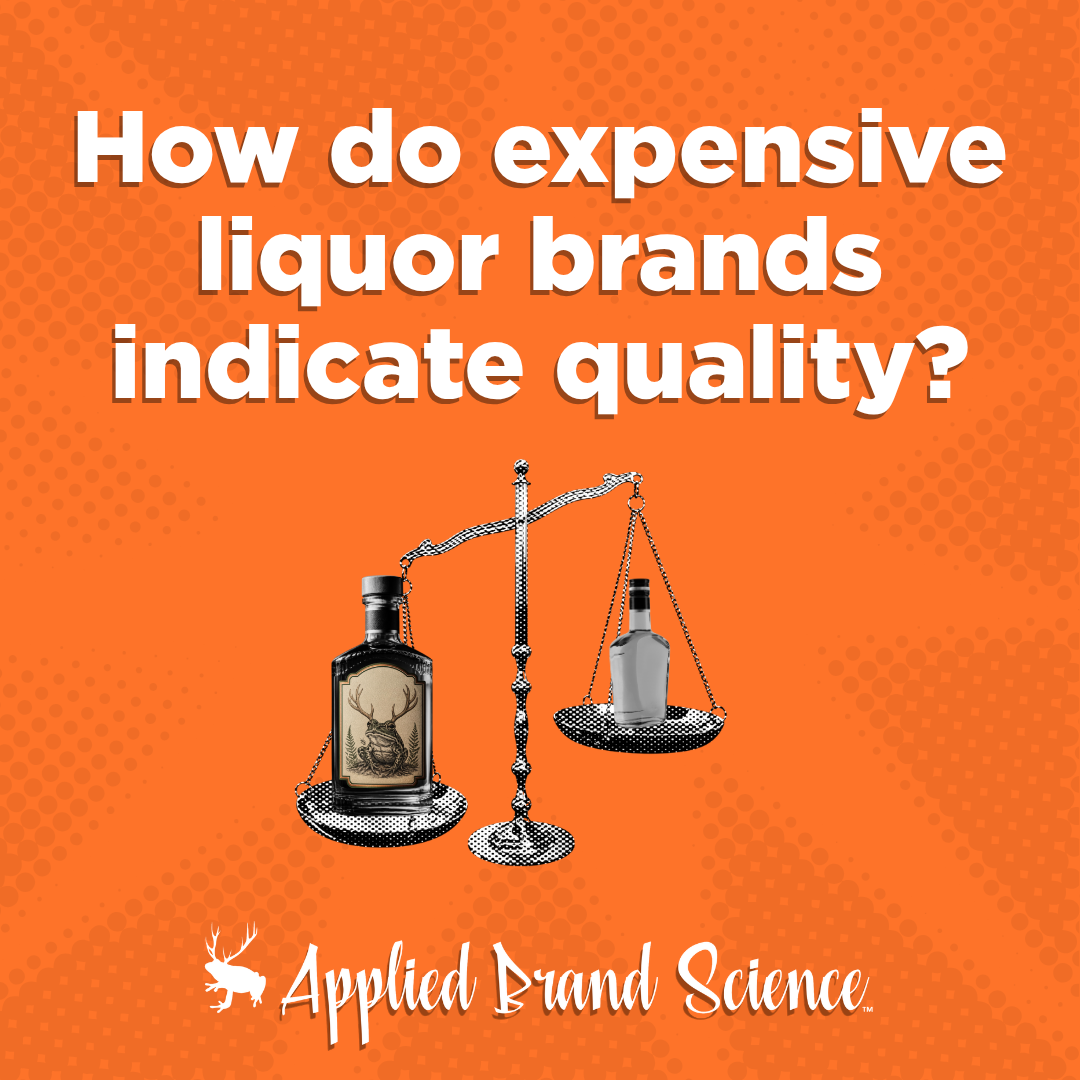
How Much Does Quality Weigh?
Should a $250 Scotch feel heavier than a $19 vodka? You'd think so. Turns out price barely predicts bottle weight. And that's a quality cue most brands are leaving on the table.
Cover Brand: Wearing the Sales Hat
Ethan Decker sits down with Thomas Sloan, a behavioral science brand strategist just launching his own solo practice.
What Happens When AI Runs Out of Humans to Copy?
The internet's filling up with AI-generated "synthetic data," and feeding that back into AI models is a recipe for garbage in, garbage out: squared.
Cover Brand: The Ice Cream Party Problem
Ethan Decker sits down with Christian Helms of Helms Workshop to talk about why the best brand work almost never starts with a logo.
Do Nonprofits Get a Pass on Brand Science?
We love to believe that mission-driven nonprofits operate on passion and deep loyalty, but are they more like businesses than we even realize?
Cover Brand: Rain Doesn’t Fall Up
Ethan Decker talks with Laura Coblentz, founder of Caraline Skincare, about the particular kind of hard it is to market your own brand — and why healthy skin, not anti-aging fear, might be the bigger opportunity in a $50 billion category.
Is anyone actually loyal to their alma mater?
Turns out 4 out of 5 college grads switch schools for their next degree — so if your customers "love" you, don't assume that means they're loyal, because loyalty and love aren't the same thing.
Cover Brand: The Expertise Curve
Ethan Decker sits down with Brad Flowers of Bullhorn Creative to talk about what happens when your expertise outgrows your brand — and why professional services firms can't just coast on reputation.
How Much Are Markets Really Stratified By Income?
Turns out rich & poor buy the same shampoo. Marketing "common sense" weeps.
Cover Brand: Old Brand, New Tricks
Ethan Decker sits down with Lee-Sean Huang, Chief Community Officer of AIGA, to dig into what happens when a 100-year-old institution has to fight for relevance in a world where nobody joins anything anymore.
What happens when a 104-year-old brand icon dies on live TV?
Planters killed off their 104-year-old mascot. But why?]
Cover Brand: In The Messy Middle
Ethan Decker sits down with Bob Jordan, founder of InterimExecs, to untangle a question every growing company eventually trips over: when do you build one brand, and when do you build ten?
Is Your Brand’s Pareto Ratio 80/20?
What does data from hundreds of companies actually show about the 80/20 rule?