What does “loyalty” look like in real markets?
Granted, there are 26 different ways to define ”loyal.” I personally hate the word in marketing because it’s so sloppy & adds this mushy emotional vibe to what is most often just habit. HATE it.
So in this case, let’s say loyalty means “I only buy one brand of X. It’s my fave and that’s all I get.” That’s a fair definition for a crappy term.
Bain & Co got some panel purchase data from Kantar in the UK. It covered everything from beer to clothes to hotels to jewelry.
And in EVERY category, most people bought from a “repertoire” of brands, not just their favorite. You know: a little Cadbury chocolate, but also some Dove, and maybe some Tony’s too. A Coach clutch, but a Burberry one too.
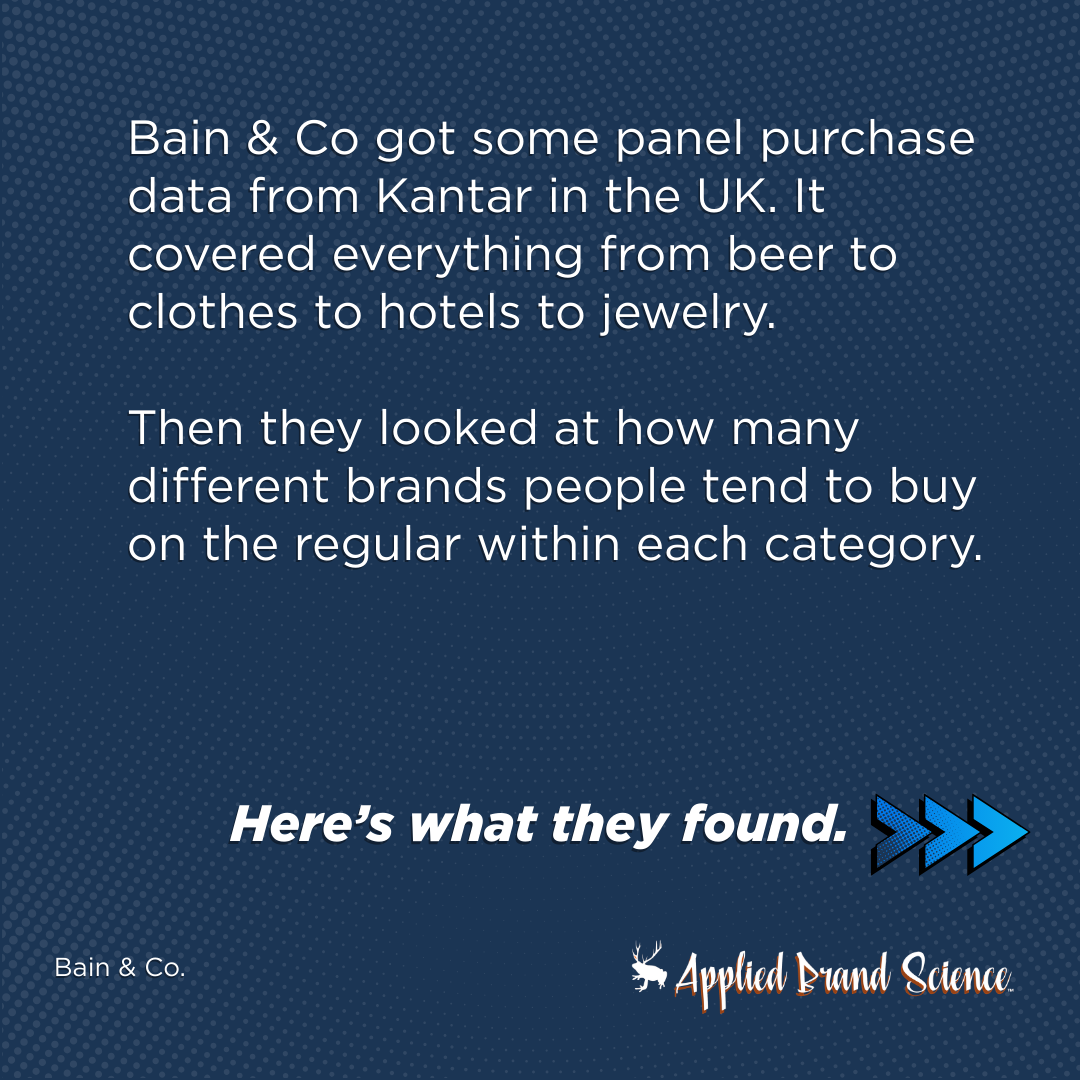
Tobacco had the smallest repertoire, just under 2. Chocolate had the biggest, just over 6. And every other category was somewhere in between.
Were there any 100% loyaly people? Of course! But a) they were the exceptions, and b) most of them were people who bought the category just… once.
So by this definition, for basically every category where options exist, loyalty is the rare exception, not the rule.
Why is this so hard for marketers to see this truth?
First, we over-fixate on “loyalty” for the brands we work on. (This is bad, but that’s for a different post.) We live & breathe our brands, and we hear the most from the heaviest and loudest users.
Second, when we look at our own buying behaviors, we over-fixate on the categories where we ourselves are loyal. (“I only buy Colgate. Always have, always will!”)
But if we look at the data, we see that repertoires are the norm, not the exception. Even in our own homes (“True, I own 3 different watch brands and 5 kinds of hot sauce….”)
So the brand science advice?
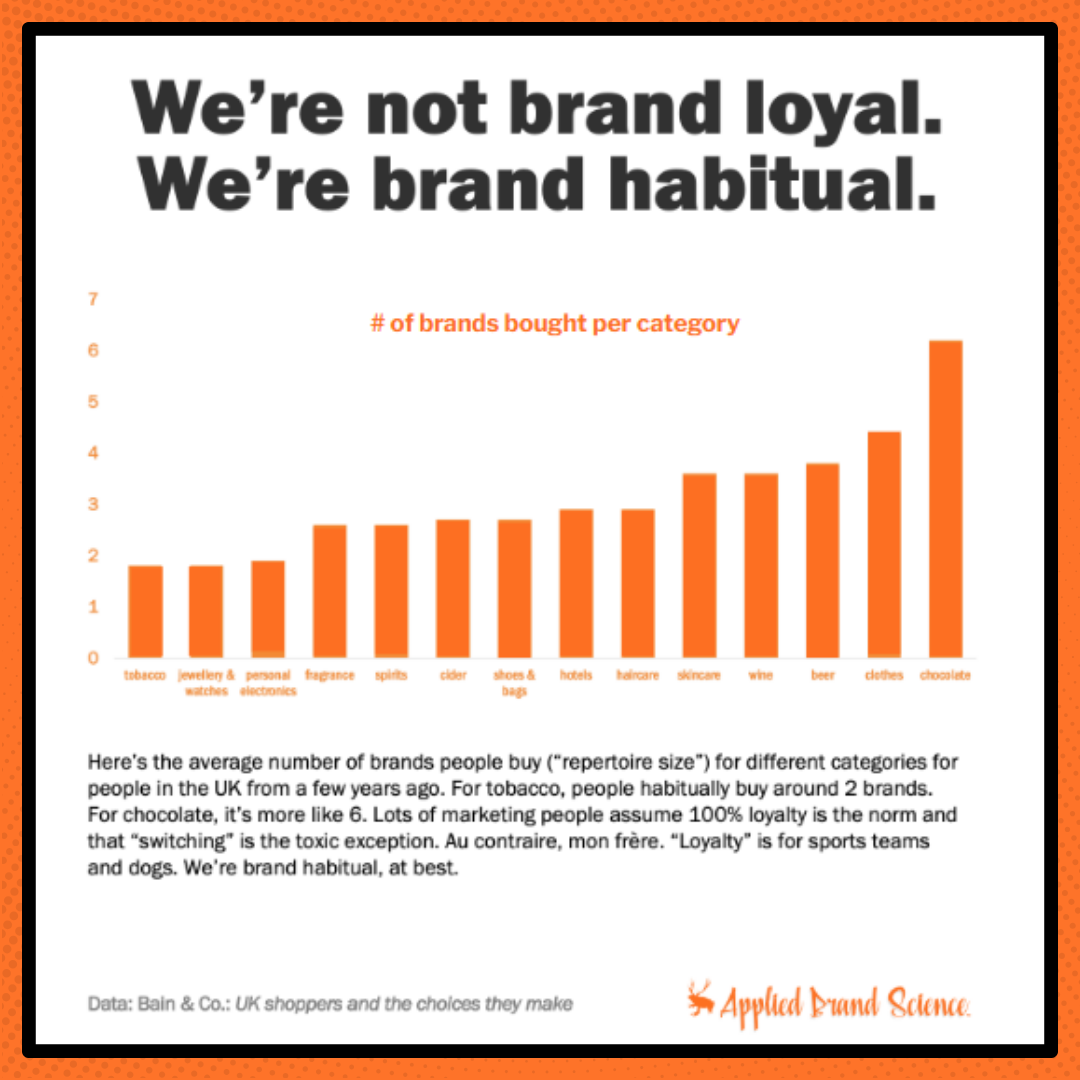
Measure buying behavior over long-enough cycles to capture natural repertoire behaviors.
Figure out the average repertoire size for your category.
Stop freaking out about “your” buyers buying other brands.
And for Pete’s sake, stop using the word ‘loyalty’.