Cover Brand: Belonging is Not a Funnel
What if the reason your marketing isn't landing isn't your message — it's that you're still treating people like targets instead of humans?
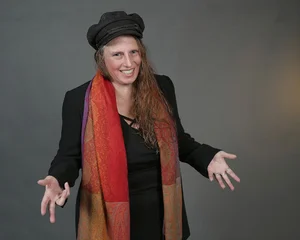
In this episode of Cover Brand, Ethan Decker welcomes back Chelsea Burns, brand ethicist and relational psychologist at The Marketing Psychologist. Chelsea's work sits at the intersection of consumer neuroscience, relational psychology, and ethical influence — and she's got a bone to pick with the way business strips the human out of everything, starting with the word "leads." Together, Ethan and Chelsea explore why 95% of brand decisions happen underground, why trust is never a checkbox, and what it actually takes to build a brand people don't just buy from — but belong to.
If you've ever wondered why your customers say one thing and do another, or why a brand that seemed bulletproof can lose its audience almost overnight, this episode will reframe how you think about the relationship between brand and buyer.
Main Topics Covered
Chelsea's core thesis: business dehumanizes by default — and why "leads," "targets," and "consumers" are symptoms of a deeper problem
Why 95% of brand decisions happen in the subconscious limbic system, and what that means for how you build mental availability with buyers
The tree metaphor: brand is the root system (underground, sensed but unseen); marketing is the trunk and branches — you can't have healthy growth without healthy roots
Chelsea's four-pillar framework: Consent → Reciprocity → Trust → Belonging — and why stopping at "trusted brand" is like finishing three legs of a relay race
Fake countdown timers, inflated "original prices," and urgency manipulation — why these tactics shatter consent and what they signal to buyers about your real intentions
Robert Cialdini's principle of reciprocity from Influence: The Psychology of Persuasion — and why a garbage lead magnet is the opposite of an equal value exchange
Why trust is never a checkbox — every touchpoint is either building it or breaking it, and the Edelman Trust Barometer isn't telling us anything snake oil salesmen didn't already know in 1880
Target's DEI retreat as a live case study in belonging collapse — when a brand flips the script, buyers don't just feel disappointed, they feel duped
VW's emissions scandal as the counterpoint — a massive trust breach, billions in damage, and yet currently the number one automaker in the world. Big brands have more foundation to absorb shocks. That doesn't mean you should test it.
The gap between stated values and actual behavior — why Gen Z says they'll only buy from values-aligned brands and then they're all on Temu and hitting Taco Bell for a $2 burrito
Ethan's leaky lazy brain framework: we don't read ingredient lists, we don't open the hood before buying a $50,000 car, and we absolutely do not read the manual after
Triple Stuff Oreos. We went there.
Additional Resources
Chelsea Burns — themarketingpsychologist.co
Chelsea Burns on LinkedIn —https://www.linkedin.com/in/chelseaburns26/
Robert Cialdini, Influence: The Psychology of Persuasion — the original framework behind ethical reciprocity
Edelman Trust Barometer — edelman.com/trust
Yuka app (referenced by Chelsea for scanning food ingredients) — yuka.io
Cover Brand Covers Playlist (Spotify) — featuring Imagine Dragons' "Blank Space" — Listen here
Your buyers are not making rational decisions in a spreadsheet. They're running on leaky, lazy brains, shaped by emotion, context, and whether your brand makes them feel like the person they're trying to become. Build for that. Subscribe to Cover Brand for more insights into the world of branding and marketing, and explore appliedbrandscience.com to dig deeper into the science behind what actually drives brand growth.