The 4% truth about grocery loyalty programs.
They seem like they just give discounts to their current shoppers, cost a lot to run, and do little to create more "loyalty".
Or do they?
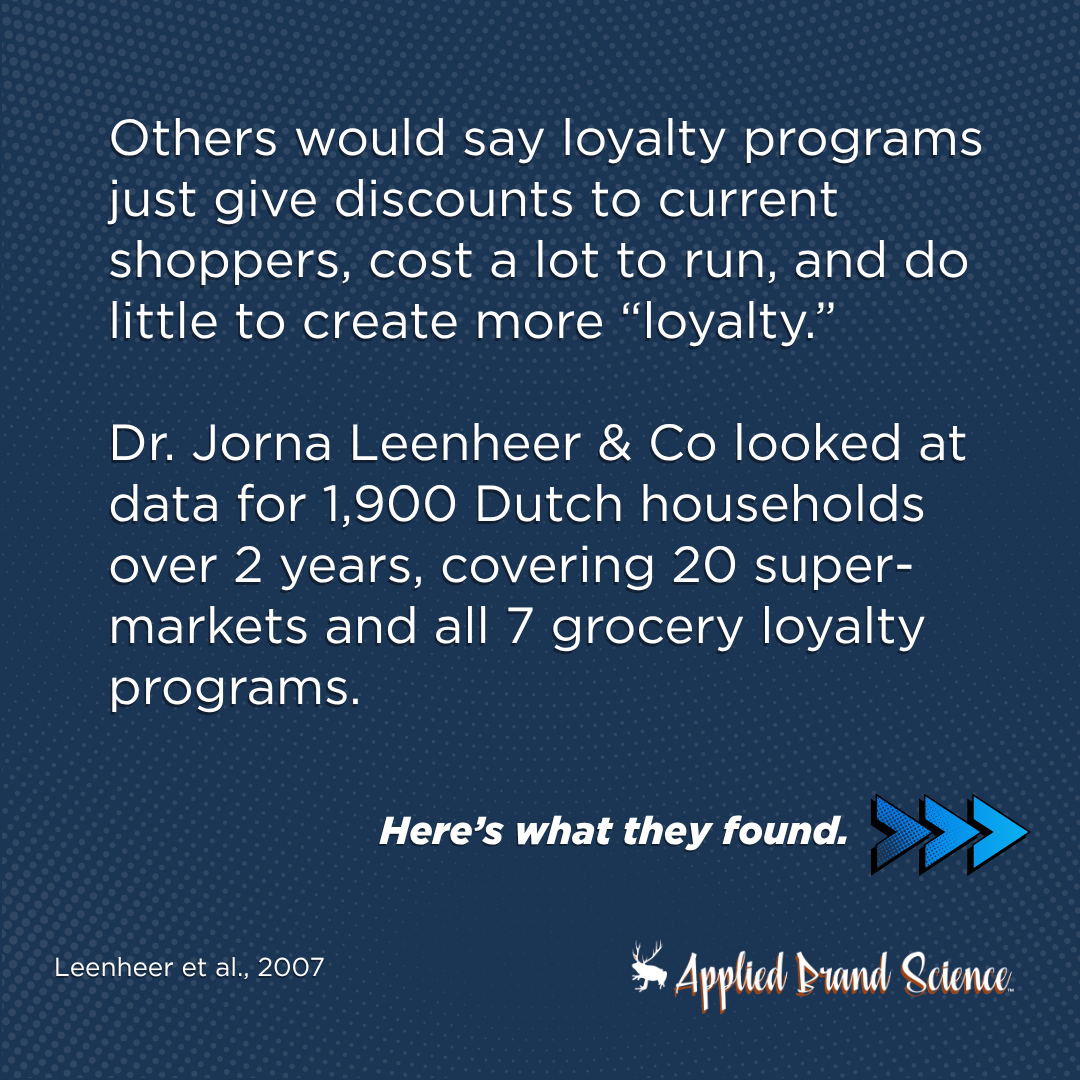
Dr. Jorna Leenheer & Co looked at data for 1,900 Dutch households over 2 years, covering 20 supermarkets and all 7 grocery loyalty programs.
The critical metric was Share of Wallet (SOW): what percent of a household's annual grocery budget went to a given chain.
Overall, SOW was never higher than 45%, meaning that even for the most "loyal" customer, they spent less than half their budget at their primary store.
If you just compare the two groups, members have a 30% higher SOW than nonmembers. That's yuuge.
However, there's a logical wrinkle: people don't necessarily spend more at a store because they're in the loyalty program. In fact, it's the opposite: people join loyalty programs because they already spend a lot there.
Think about it: if you rarely ever shop at a store, you're unlikely to sign up for their loyalty program. But if you shop somewhere a lot, you might as well sign up & get some perks too.
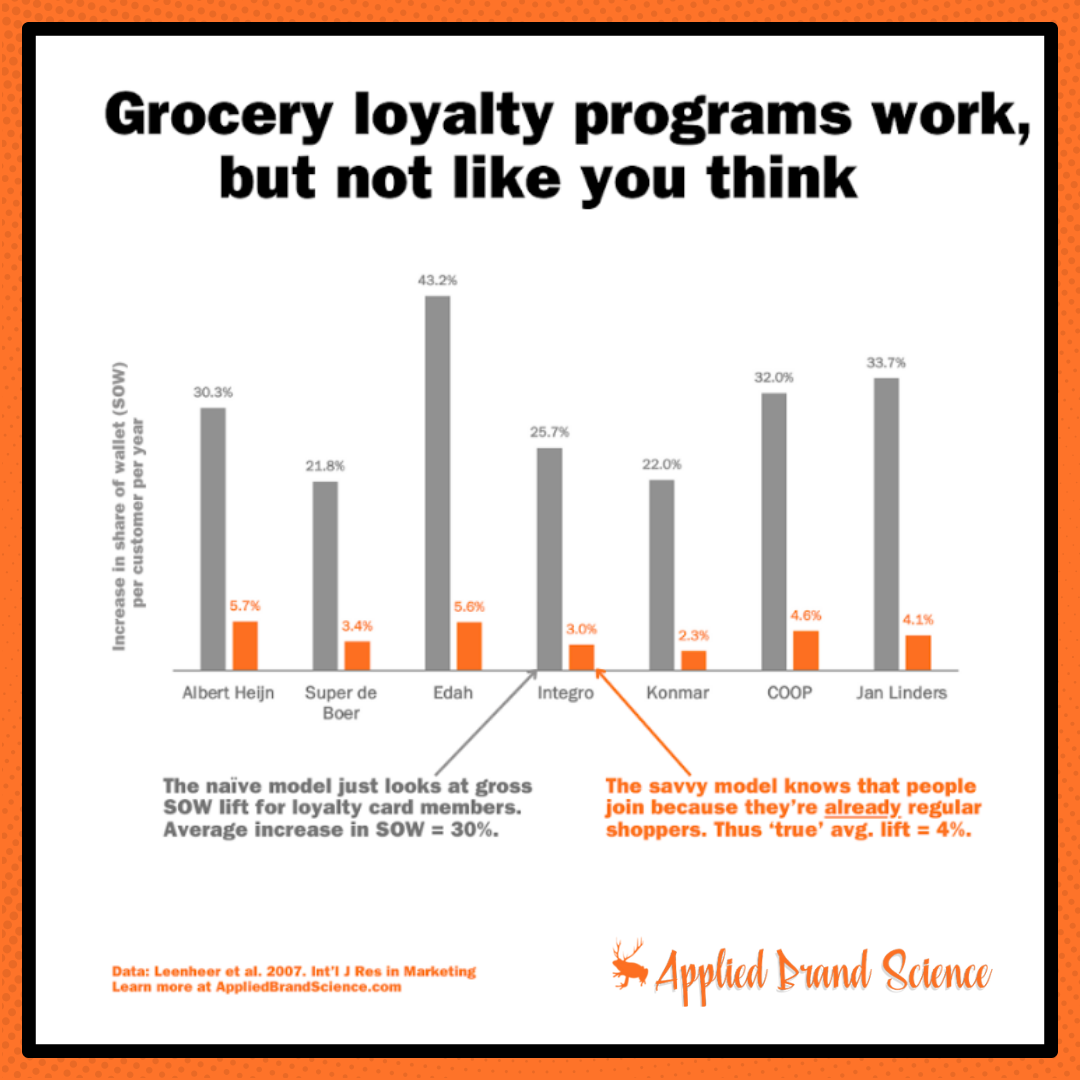
When you adjust for this self-selection bias (aka 'endogeneity'), loyalty programs really only lift SOW about 4%.
That's waaay lower than 30%. But it still adds up. Every program is a money-maker, netting from €90 to €230 more per member per year.
Some lessons:
1. Your loyalty program probably has a more mild effect than you think.
2. Control for endogeneity when you run the numbers.
3. Loyalty program design really really matters.